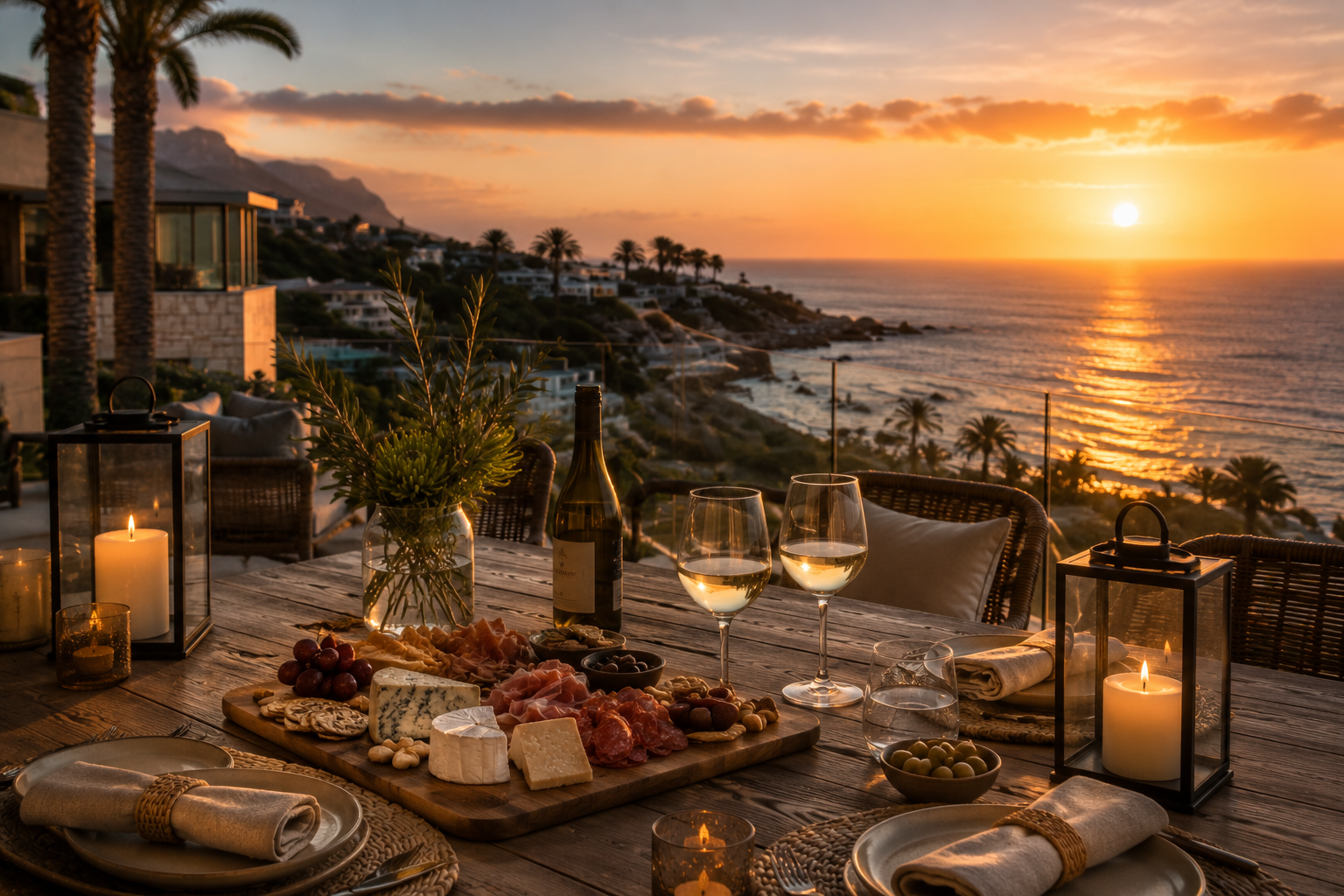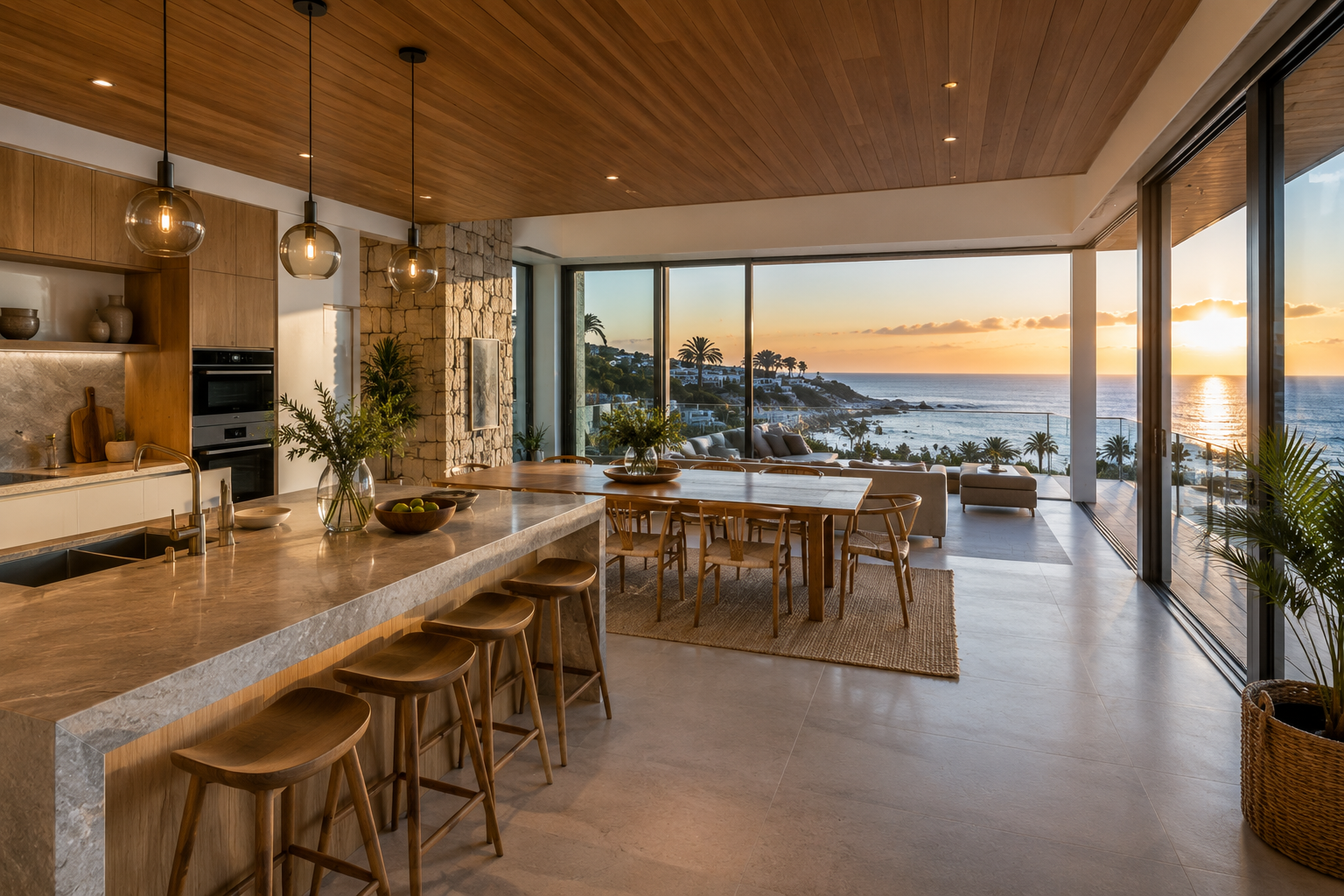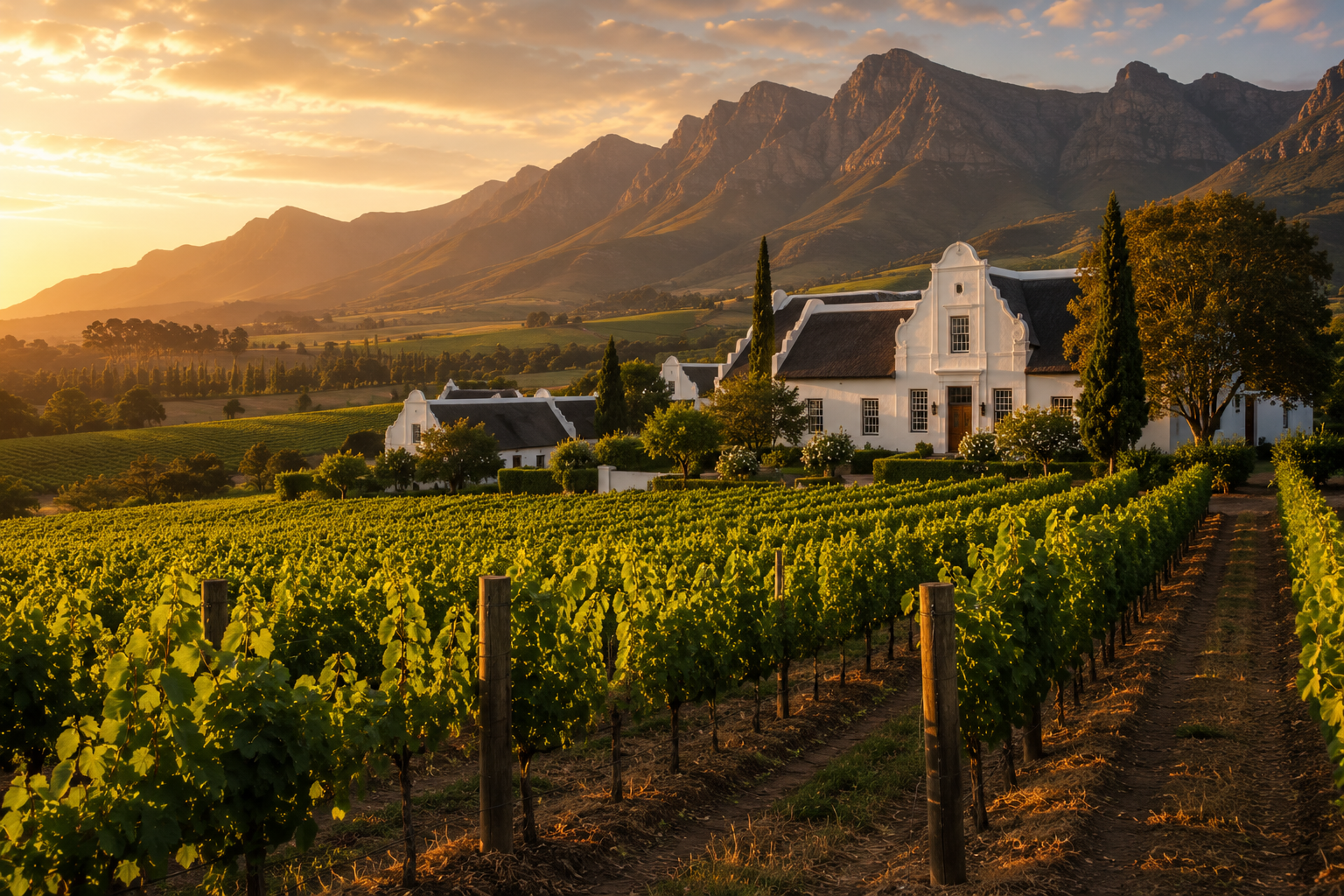
One of the strange privileges of staying in a Cape Town villa is that some of the most interesting wine country on the planet sits within a forty-five minute drive of your front door. The Cape Winelands are not a single route but a constellation — distinct regions with very different soils, climates, grape varieties, and atmospheres. For a villa traveller, knowing which one matches which mood is the difference between a good day out and a great one.
Here is a working guide to the routes worth knowing, and how each one tends to feel.
Stellenbosch: the historic centre
Stellenbosch is the route most travellers visit first, and rightly so. It is the oldest continuously producing wine region in the country, with a concentration of estates that would do credit to any European wine town. The grammar is Cabernet, Chardonnay, and increasingly assertive Pinotage; the architecture is Cape Dutch with later French gables; and the visitor experience runs from the formal grandeur of estates like Rust en Vrede to the small-batch quirk of producers like Reyneke and Mvemve Raats.
For a first trip, the Helderberg sub-region is the easiest soft landing. The estates there sit close together, the tasting rooms are sophisticated without being precious, and the drive between them is short.
Franschhoek: the eating route
Franschhoek is the route to drive when the goal is lunch rather than tasting. The valley is small, hemmed in by mountains, and packed with farm-to-table restaurants that have grown out of the wineries themselves. La Colombe at Silvermist, Foliage, and the Werf at Boschendal are the headline names, but the smaller operations — La Petite Colombe, Le Petit Manoir — often do the more interesting cooking.
For visitors interested in the wider wine route as a regional system rather than a single valley, Franschhoek is the obvious pivot point: it sits between Stellenbosch and Paarl, with easy access to both.
Hemel-en-Aarde: the quiet alternative
An hour and a half east of Cape Town, the Hemel-en-Aarde Valley behind Hermanus is where the country's most serious cool-climate winemaking is happening. Hamilton Russell, Bouchard Finlayson, Newton Johnson, and Crystallum are doing Burgundy-grade Pinot Noir and Chardonnay on shale and weathered granite soils that genuinely have no equivalent elsewhere in the country.
The valley is quieter than the major routes, the tasting rooms are smaller, and the drive itself — over the Hemel-en-Aarde pass with whale-coast views — is a destination on its own. If you have time for only one trip beyond the obvious, this is it.
Constantia: the route you can taste before lunch
Finally, the route that almost no first-time visitor realises is in the city itself: Constantia. The wine estates of the Constantia Valley — Klein Constantia, Buitenverwachting, Steenberg, Groot Constantia — sit a fifteen-minute drive from the Atlantic Seaboard. The soils are cool, the wines are predominantly Sauvignon Blanc and Constantia's legendary sweet Vin de Constance, and you can be tasting on a vineyard terrace by 11am, back in the city for a swim, and at a Camps Bay dinner table by sunset.
For a villa-based week, this is the route that requires the least logistics and delivers some of the most rewarding tastings.
How to plan it
One useful framework: choose one major route for a full day (Stellenbosch or Franschhoek), one specialist route for a half day (Hemel-en-Aarde if you have time, Constantia if you don't), and leave at least one slot unscheduled. The Cape Winelands reward unstructured afternoons.