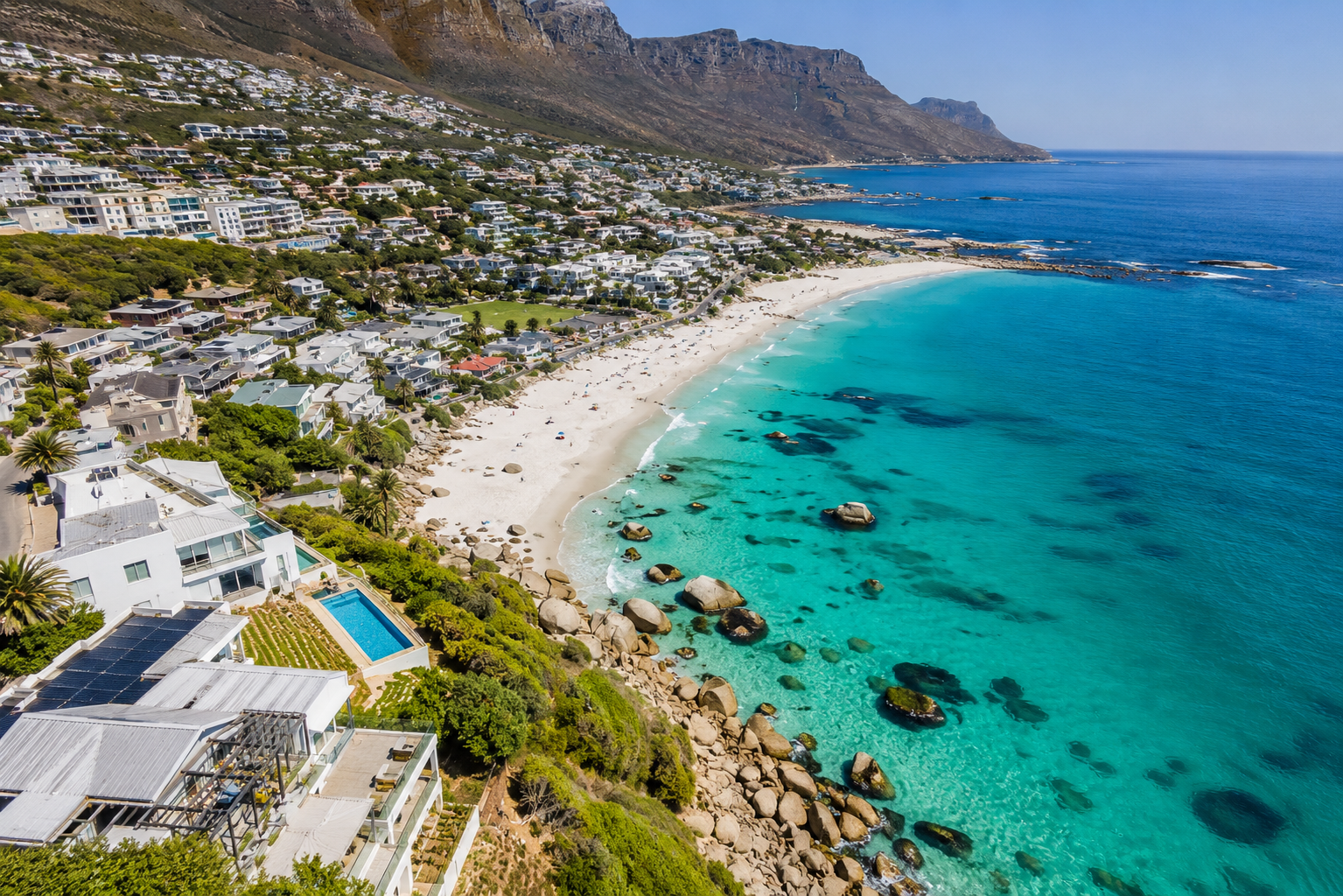
On a map, the walk from Camps Bay's main strip to Fourth Beach in Clifton takes a little under twenty minutes. On the ground, the two postcodes feel like different small countries that happen to share a coast. They face the same Atlantic, sit at the foot of the same Twelve Apostles, and yet behave so differently between sunrise and supper that choosing between them is one of the more useful questions a Cape Town traveller can ask themselves.
Here is how the two beachfront streets actually differ once you live on them for a week.
Camps Bay is a public street
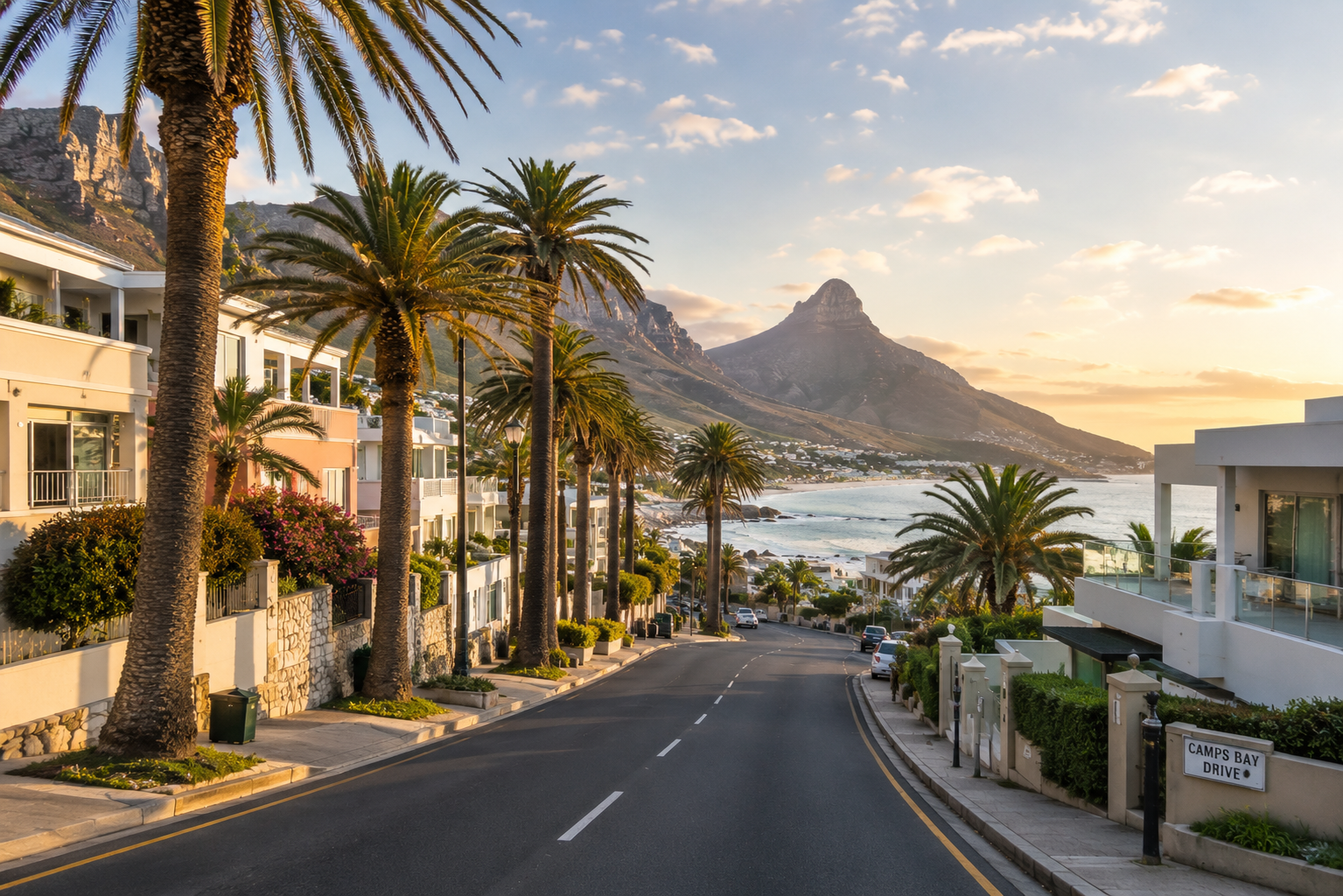
The defining feature of Camps Bay is that its beach has a road in front of it, and that road has a row of restaurants. The whole strip works as one continuous social organism: surfers cross between coffee and the sea, cars circle for the best parking spot, and from late afternoon the pavement tables fill up in a slow procession of sunglasses and rosé. The villas above the main road are not really tucked away — they sit on a hillside that looks down onto this whole performance.
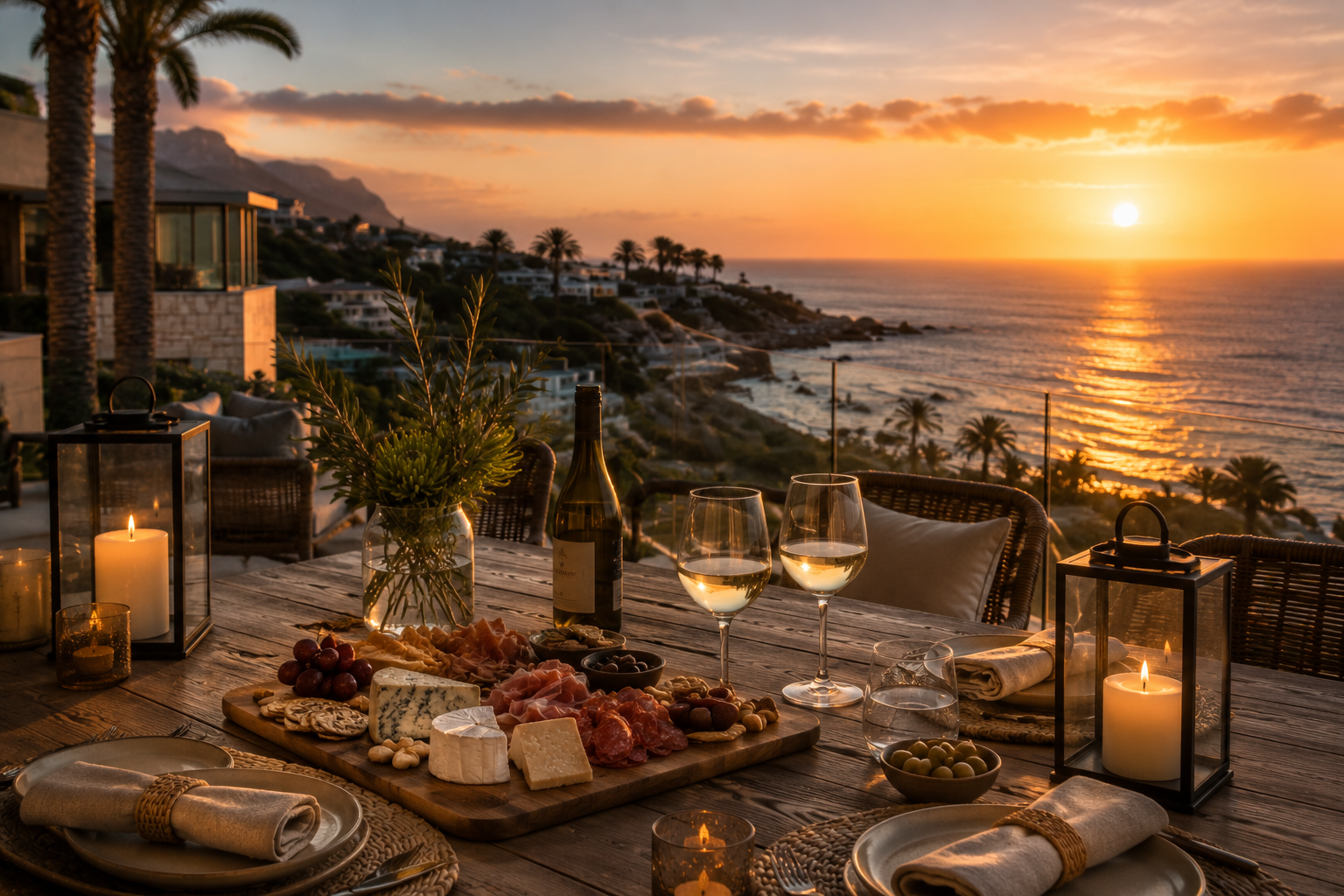
What that means in practice: if you stay in Camps Bay, you are buying convenience and theatre. You can walk to dinner. You can also hear it. The mid-summer evenings are warm, loud, and absolutely committed to the idea of being seen.
Clifton is a series of private staircases
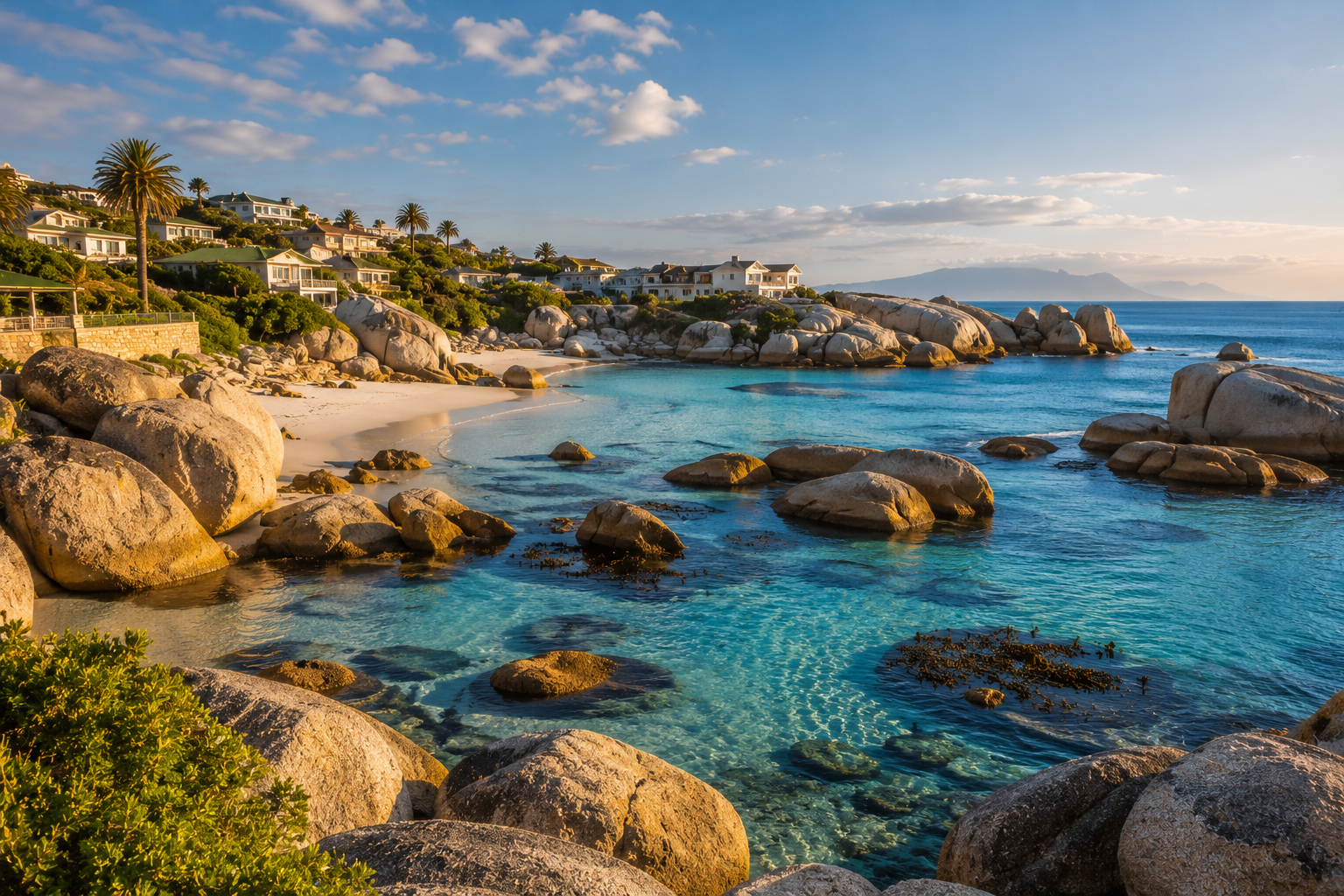
Clifton's beaches do not have a road in front of them — they have staircases. To reach First, Second, Third, or Fourth Beach you walk down a long flight of steps, usually carrying a cooler and a beach umbrella, and emerge onto a sheltered cove cut off from traffic. There is no strip of restaurants and no passing scene; once you are on the sand, you stay there until the sun moves.
The villas above Clifton, then, behave differently. They are quieter, more private, and rarely interact with each other at street level. Most have their own staircases, their own gates, and a sense that the front door faces inwards rather than outwards. If Camps Bay is a public street, Clifton is a series of private worlds stacked up a cliff.
Wind, sun, and the matter of which beach to choose
The other quiet difference is microclimate. Camps Bay catches a strong south-easterly in summer; the palms bend, the umbrellas roll across the lawn, and the wind can shape an entire day. Clifton's coves are sheltered by their bluffs, which means that on a windy Cape day they can be three or four degrees warmer and significantly calmer than the main beach a kilometre away.
Locals navigate this by switching beaches mid-day rather than committing to one. Travellers tend to do the opposite — book a villa on one strip and stay loyal to it.
Choosing for the holiday you actually want
A useful rule of thumb: Camps Bay rewards travellers who want walking-distance restaurants, an active social rhythm, and a slightly louder week. Clifton rewards travellers who want a quieter villa, sheltered swims, and to drive to dinner rather than walk. Neither is better. They are just different streets, doing different things, on the same stretch of Atlantic.
Most of the regulars I know choose one and stay loyal — and then quietly walk over to the other for a single afternoon, just to remember why they didn't pick it.