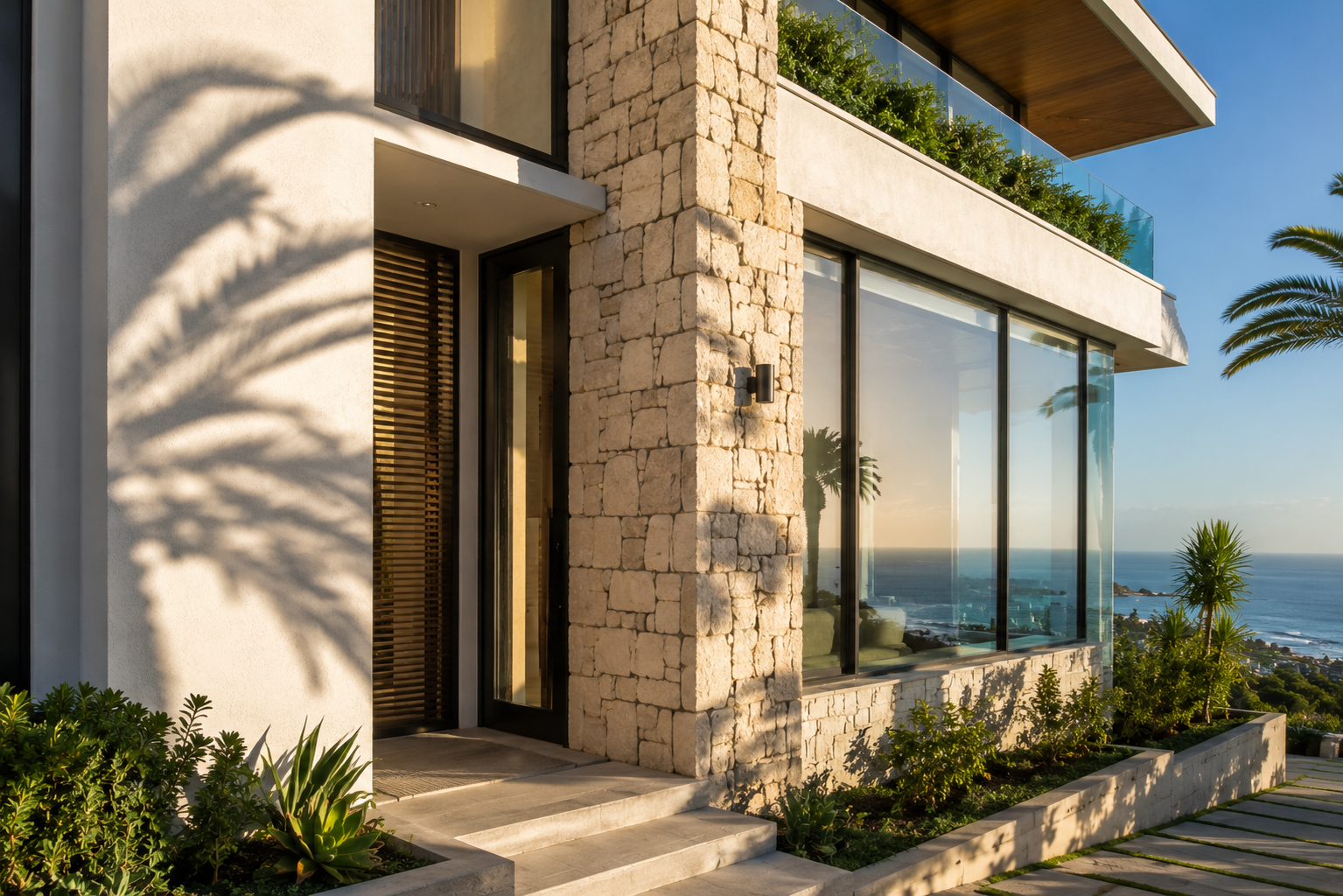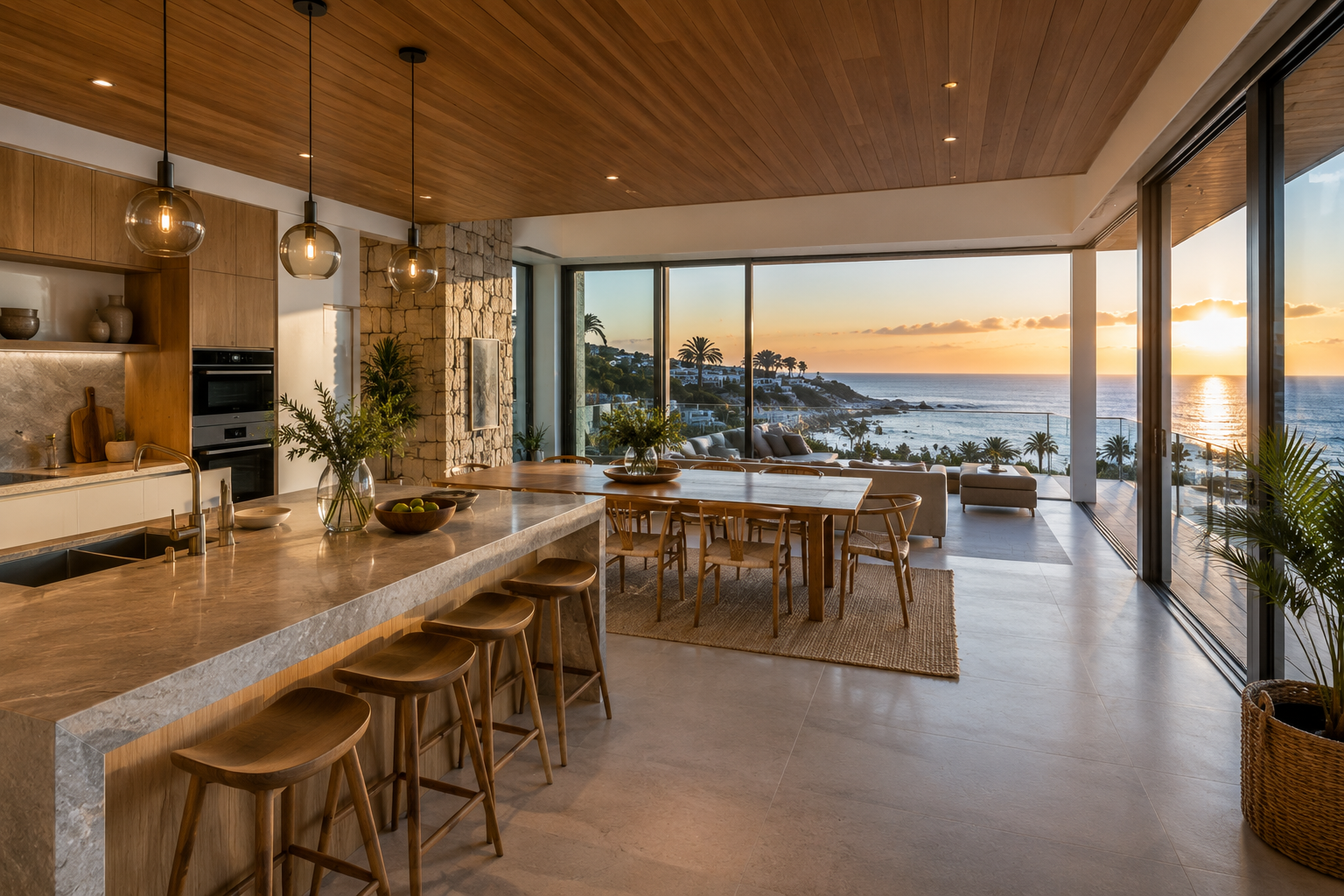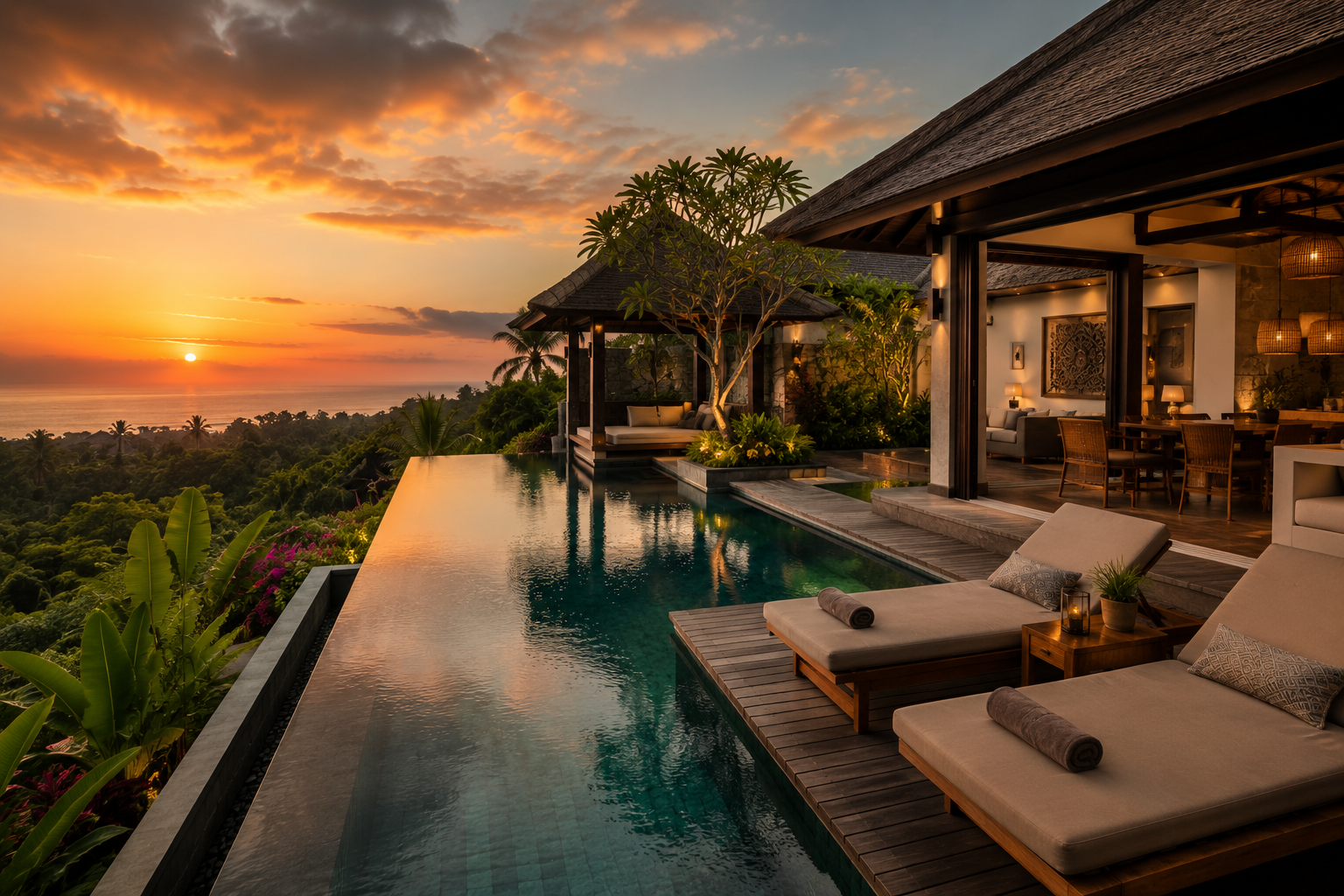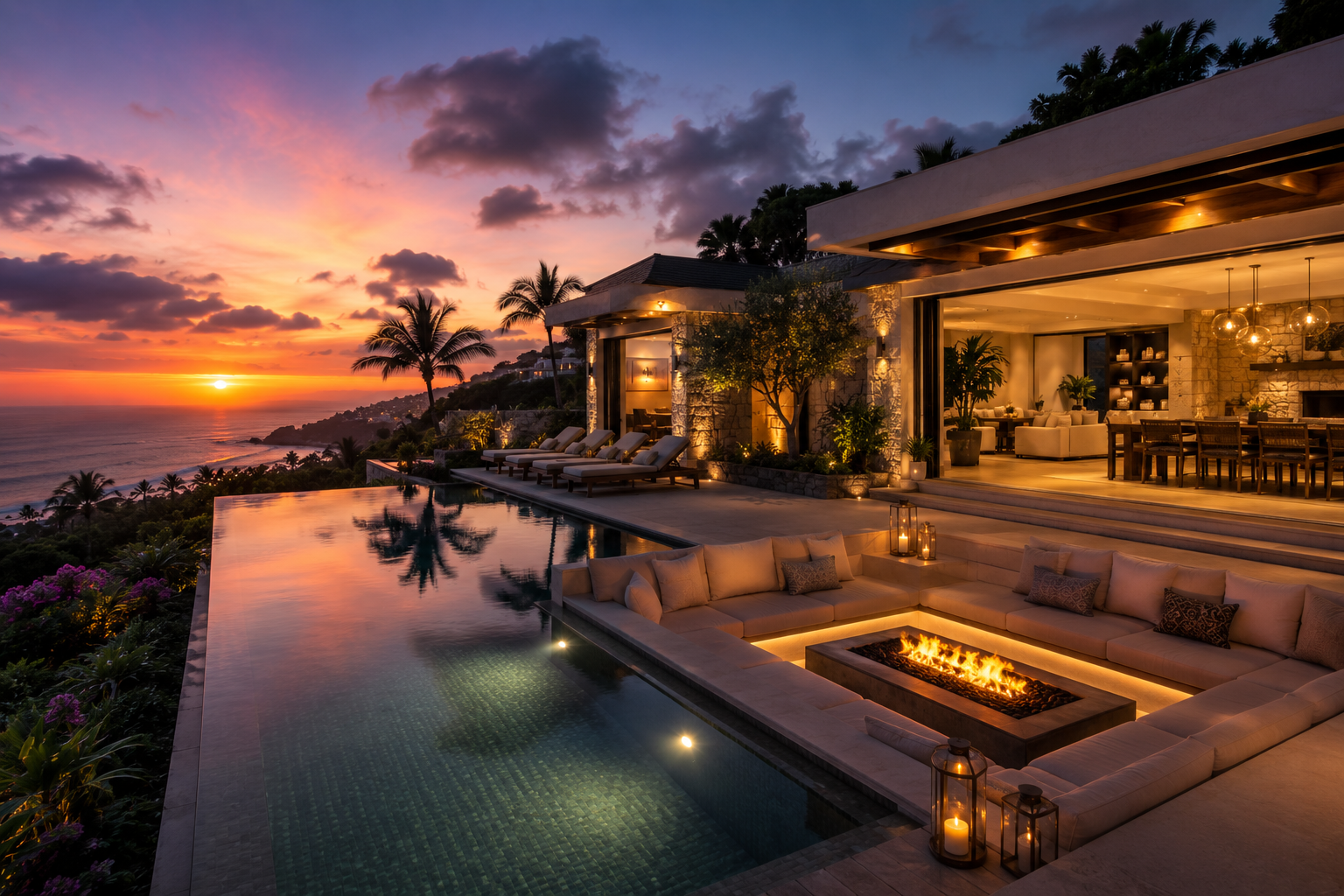
The coastal interior of 2026 has finally moved on from the things it was famous for. Walk into any well-considered Cape villa being finished this year and you will notice the absence of the obvious — no rope mirrors, no driftwood lamps, no slogan cushions about the sea. What has replaced them is quieter, browner, and a great deal more architectural. The beach house, after twenty years of decoration, is starting to behave like a house again.
Here is what owners and designers are actually doing this year.
The palette has moved towards warm brown
The defining shift of 2025 and 2026 has been a move away from the cool white-and-blue coastal palette towards something significantly warmer. The new base is a stack of mushroom, biscuit, tobacco, and rust, with cool blues used as accents rather than primary tones. The result is rooms that feel grounded rather than aquatic — closer in mood to a Mediterranean farmhouse than a Hamptons beach cottage.
The practical reason: the ocean is already blue. A room painted blue, looking out at a blue sea, flattens the view. A warm-brown interior frames the water and makes it the most vivid thing in the picture.
Texture is doing the work that pattern used to do
The second shift is textural. The coastal interiors that look best in 2026 are using burlap, jute, raw linen, unglazed terracotta, and unfinished oak in place of patterned fabrics. Walls are getting limewash finishes rather than smooth plaster. Floors are being sanded rather than sealed. Sofas are being slip-covered in heavyweight linen rather than upholstered in printed cotton.
The cumulative effect is a room that reads richly even when it is essentially one colour. Designers describe this as "tone-on-tone with texture differences," and it works particularly well in houses with strong architectural bones.
Windows are being treated as the only artwork
The third trend is the most architectural of the three: large coastal windows are being left almost entirely undressed. No curtains, no roman blinds, no decorative window treatment. Where privacy is needed, designers are specifying internal sliding panels or external louvred shutters. Where it isn't, the window simply runs floor-to-ceiling without ornament.
The corollary is that art is being thinned out. The 2026 coastal villa typically has one or two large pieces in the main room and very little else. The window is the picture; everything else competes with it.
Furniture is getting heavier, lower, and more committed
Finally, the furniture itself is changing. The lightweight, mobile, summer-house pieces of the last decade are giving way to heavier, lower, more permanent furniture. Long oak benches replace pairs of armchairs. Built-in window seats replace freestanding sofas. Large stone-topped coffee tables replace the woven ottoman. The houses, in other words, are being furnished to be lived in twelve months a year rather than borrowed for summer.
There is a generational thing happening here. The owners commissioning these interiors are increasingly using their coastal homes as primary residences or hybrid work bases rather than holiday rentals. The furniture is following.
What this means for villa travellers
From the visitor's side, the 2026 interior is harder to photograph and easier to live in. The rooms feel deliberate without being stiff. The light moves through them differently. And the views — finally — are doing the heavy lifting they were always meant to.